News Article
50% Off: Duke Energy Launches EV Charging Pilot with Strong Incentives
May 18, 2026
News Article
From 11 p.m. to 5 a.m., customers on this rate will pay $0.065/kilowatt-hour (kWh) for all home electricity use, EV charging included. A form of time-of-use rate, this offering is unusual, and special, in that there’s no real penalty for using electricity during other parts of the day.
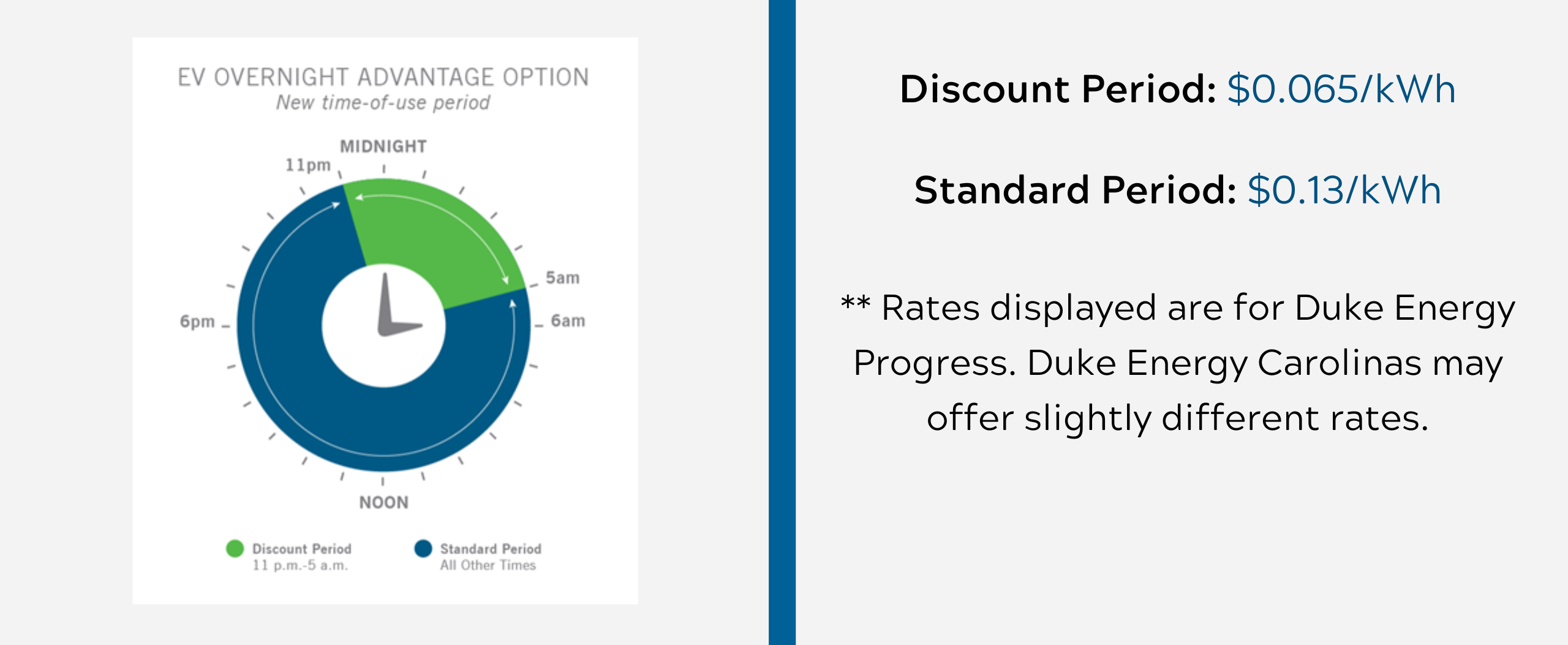
Instead of implementing higher “on-peak” prices to discourage customers from running appliances and other devices when the grid is most strained, the EV Overnight Advantage Option charges just $0.13/kWh for the remaining 18 hours of the day — only about one cent more than the standard electricity rate. This straightforward setup presents a highly compelling reason to schedule EV charging (and possibly other electricity uses) for the late-night window, without fear of getting hit with a steep utility bill when shifting energy consumption is less feasible.
In this case, no. Rather than focusing programming and tariffs on complex schedules that account for seasonal variation in electricity demand — peak periods in North Carolina are generally in the early evening in the summer and in the morning in the winter — this simple pilot provides a fixed year-round structure and a strong incentive to change behavior.
Ultimately, the objective is clear: to better utilize the grid by taking advantage of times when it’s under less stress. When energy use is more predictable and balanced, rates for all customers — EV drivers and not — can stay more affordable.
Full details about the EV Overnight Advantage Option can be found here.