News Article
Catawba College’s Electric Rideshare Is All the Buzz
October 15, 2025
News Article
For Catawba College, sustainability is everywhere. The Salisbury, North Carolina, school empowers its students to forge cleaner paths and celebrates these values with bold (and fun!) campus programming.
One such initiative is CatawbaGO, a free electric vehicle (EV)-based rideshare program. We spoke with Noah Upchurch, the College’s sustainability program director, about its early success.
Can you tell us about Catawba College and the impressive decarbonization work the College is leading?
Catawba College is embarking on a number of innovative sustainability projects, from the first projected Passive House-certified residence hall in North Carolina, to a former coal-plant-turned-Living-Building, to a geoexchange well field bringing ~90% of campus infrastructure off carbon-based heating and cooling. The College continues to add on-site renewable energy, resiliency through battery storage, and electrification to 75%+ of its fleet vehicles and equipment.
The work is morphing into a vision of not just decarbonization but of ecological abundance and regeneration, which Dr. Lee Ball — Vice President of Sustainability at Catawba College — calls Campus as Forest. It builds upon the work of Dr. John Wear and many, many Catawba College students, administrators and community members. This website has a lot of this information and more, plus pictures!
Can you share about CatawbaGO? How do students use this service?
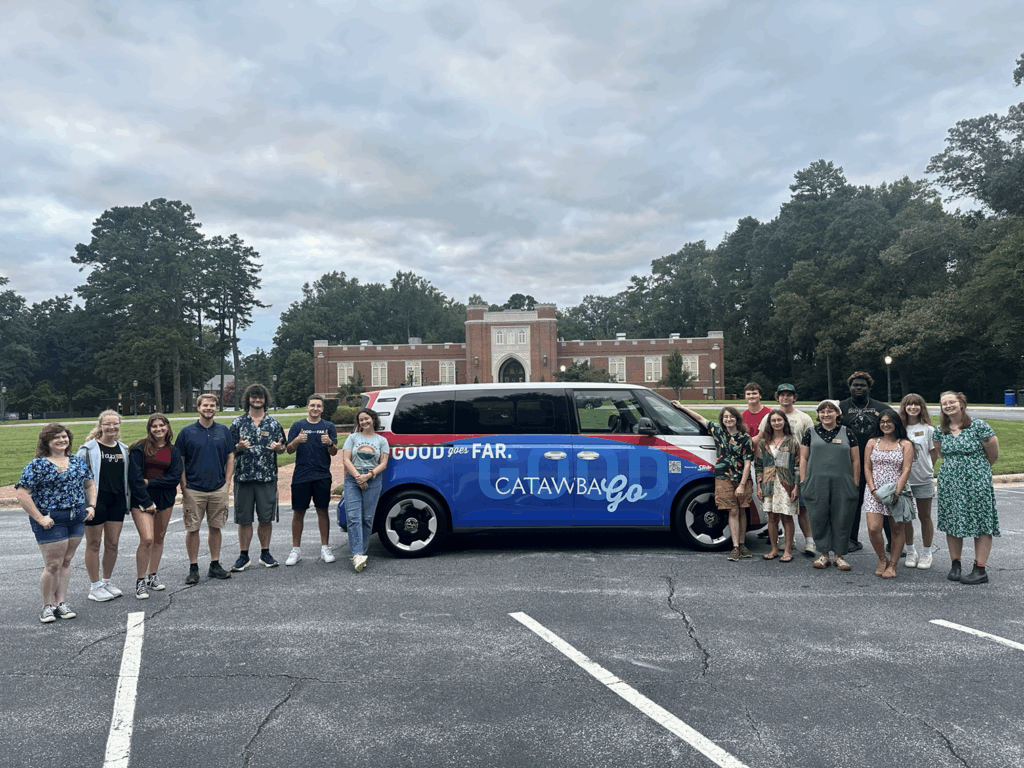
CatawbaGO is a free EV ride service that takes our students, faculty or staff almost anywhere in the City of Salisbury for free. It runs between 9 a.m. and 11 p.m. every day of the week, and is clean, safe and cost-effective.
Students hail rides or schedule them ahead of time through the CatawbaGO app, which is available on their phones. They have an interface where they can tap on popular locations or put in an address for pickup and dropoff. The service is provided through a third party, Slidr, which was founded by a Catawba College alum, Mike Trombino ’13.
Why is it important to operate CatawbaGO with electric fleet vehicles? Is it more about fuel savings, emissions savings or aligning your actions with the College’s values?
The College would not be able to use internal-combustion-engine (ICE) vehicles for this project. It’s about all three — how the vehicles reduce air pollution and commuter miles, allow students to see EVs for perhaps the first time, and continue to align our community to the sustainable solutions that we’ve been committed to for a long time.
It’s also about meeting a need for our students, faculty and staff, some who are living off campus, can’t afford or don’t have a car, and like the reduction in stress related to campus parking. We’re renovating residence halls right now, so we need this flexibility. It’s about connectivity and sustainability.
What EVs are you using for the fleet operations?
Ford E-Transit vans and the Volkswagen ID. Buzz. The E-Transits are large people-movers with a comparatively low, but very serviceable, range (~150 miles). One has an ADA lift, which is very important. We can do about 130 laps around the College on a charge or get to Charlotte and back easily, so it suits our needs. The ID. Buzz has a 280ish-mile range and lots of features, like heated, cooled and massage-capable seats, so it’s an elevated riding experience.
I bet the ID. Buzz, especially, is getting all sorts of attention. Do you think it helps get students, faculty and staff interested in electrification?
Absolutely. We’ve been asked when we’re going to put a wrap on it to look like a Catawba College Mystery Machine. Dr. Ball recently obtained an old 1982 VW van, so it feels very on-brand. It gets lots of waves and cheers from folks as we ride around Salisbury.
Has there been any feedback from students so far? Do you think that having fun vehicles like this encourages students to use the service more?
We have a rider satisfaction rating of 4.99/5.00. It has been so helpful for some of our students to see downtown Salisbury for the first time. On special programming, like taking students to learn about and practice line dancing in Kannapolis or to see regenerative design principles at Camp North End in Charlotte, it has been invaluable. We wouldn’t have been able to move so many students like that previously, let alone in a more sustainable way, using a diesel or gas-powered vehicle.
The convenience, fun and exclusiveness of the program make it palatable for students. They know that the vans are there for them.
Have you calculated fuel or emissions savings so far?
We have served 3,788 on-demand and fixed-route riders thus far, with an average of 2.79 miles per trip. That doesn’t include special rides or football game-day shuttle numbers. We’re well over 10,000 person-miles traveled and probably quite a bit higher.
ICE Ford Transit vans typically get 15–17 miles per gallon, so conservatively we’ve avoided over 500 gallons of gas equivalent in around a month of service.
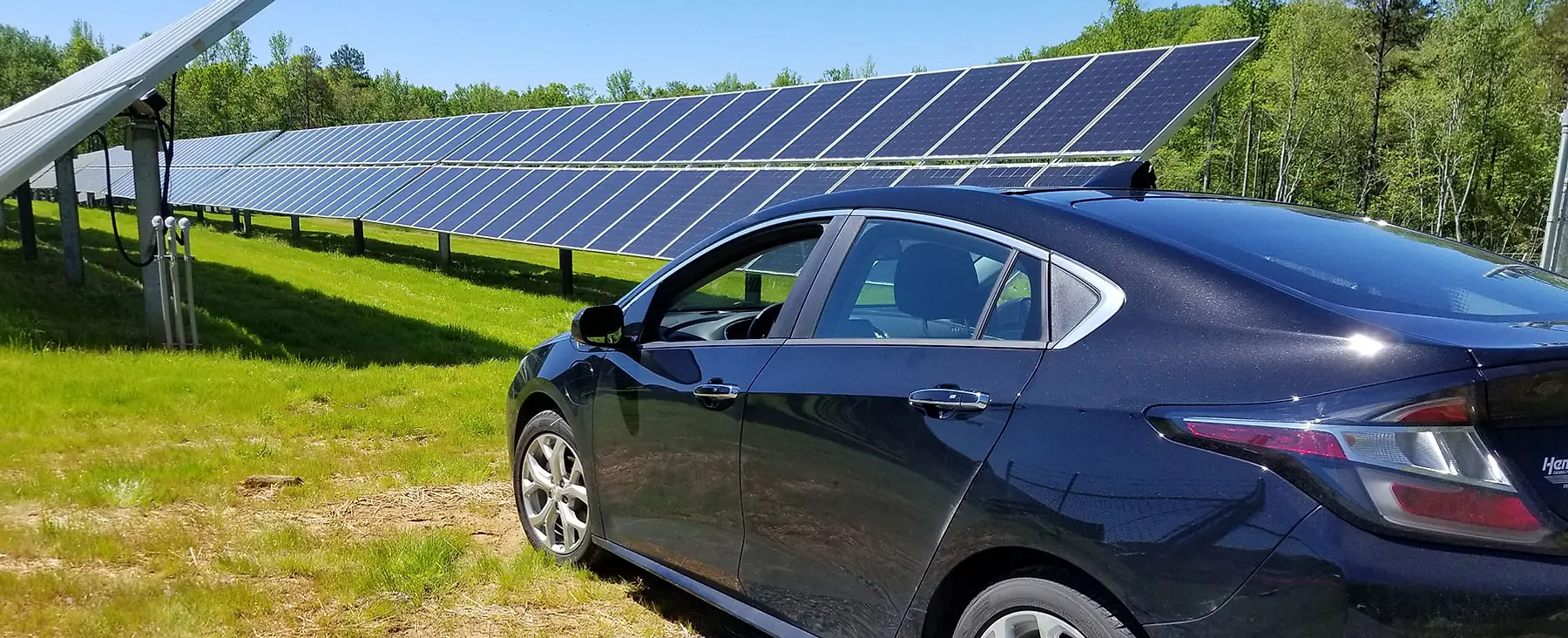
The vans are charged underneath our relatively new beach volleyball solar array, so we know they’re running on a great percentage of clean energy.
What do you think other colleges and universities should consider as they evaluate the switch to electric fleet operations?
The fuel costs and use cases. It costs less than $10.00 to fully charge the ID. Buzz and closer to $5.00 for the E-Transits. Commercial entities pay less than residential customers for electricity, so even if you don’t have on-site renewables, you’re still assured significant savings in cost per mile in North Carolina.
Do you need to go more than 200 miles with this service daily? If so, you might need a hybrid. But with gas prices unpredictable and high right now, electric is a great option for vans that are going to run a lot. The vehicles are silent, which students like, and the technology included is worlds better than other tech.