News Article
Cooling on Combustion: An HVAC Contractor’s Transition to an All-Electric Fleet
August 12, 2025
News Article
Mitchell Demitruk is the founder and owner of Super Cool, a small, locally owned heating and cooling contractor serving the Charlotte area. Super Cool is all in on electric vehicles, and I caught up with Mitchell to chat about that decision and how it’s going.
When you and I met, you told me you don’t plan to buy another combustion vehicle for your fleet. Why?
It doesn’t make sense. We’ve found a way to keep most of our days under 100 miles of driving, and range is the only reason I can see to buy a gas vehicle. We spend less money on fuel and maintenance, they’re more pleasant to drive, the AC works better, and they’ve been more reliable.
What led to your decision to purchase your first electric van?
Before I started the company, we bought a Chevy Bolt as a personal vehicle and immediately fell in love with the smoother driving, not burning fossil fuels, and not going to the gas station. Environmental impact was one consideration, but then the cost and time savings became obvious.
When I started Super Cool HVAC, I saw Ford was building an electric van. I knew it would restrict my range, but I would rather be working than driving, so I wanted to focus on limiting my service area rather than taking jobs that were far away. I ordered the van as soon as I could, received one of the first Ford E-Transit vans in the country in early 2022, and immediately started making moves to retire our diesel van.
Buying the vans through the expensive COVID years definitely didn’t save us money, as they were not cheap. Since then, though, the E-Transit resale value has plummeted, and we’ve purchased even more slightly used vans.
How many electric vans are you currently running? What percentage of your fleet is electric?
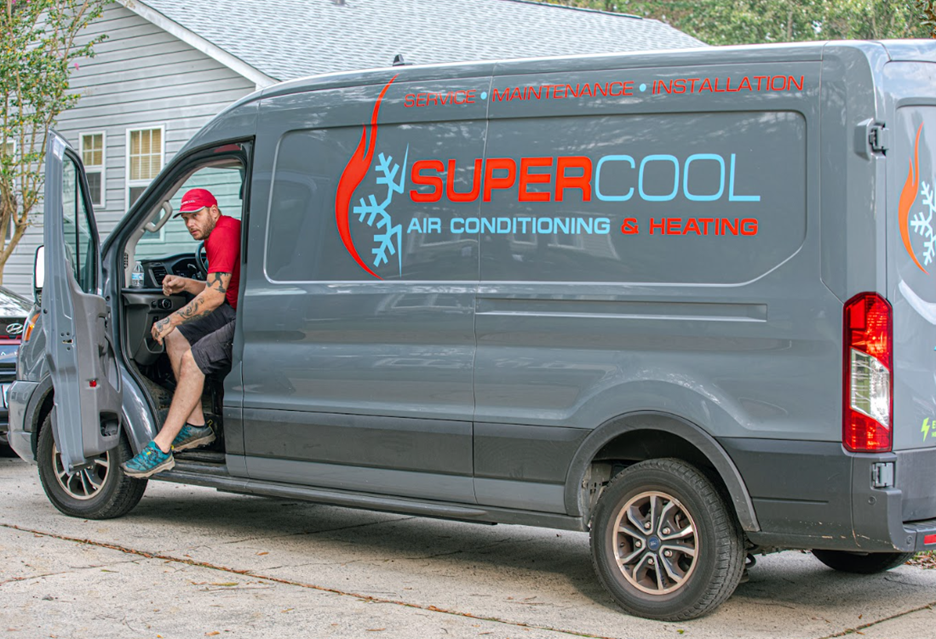
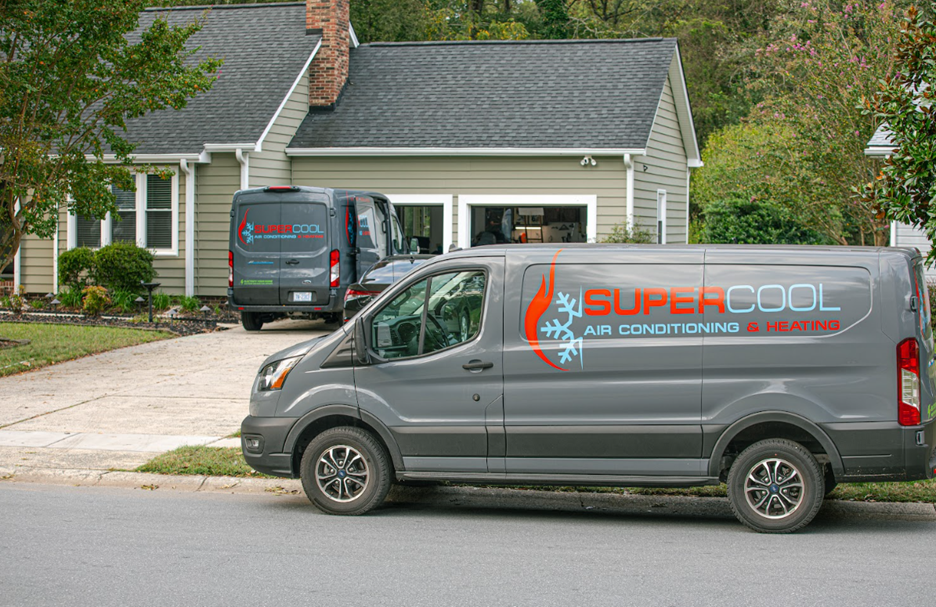
Of our daily-driven service vehicles, we have eight E-Transits, three Chevy Bolts and one gas van, so over 90% of our fleet is electric. And the only reason we have the one gas van is because our team member lives beyond the consistent workable battery range of the original E-Transit.
How much do you think Super Cool saves in fuel per month?
I don’t know exactly what we’re saving in fuel, but it’s only one piece of the puzzle. Last year we spent about $3,500 on gas, and that was mostly just for the one gas van. I figure we would have spent closer to $30,000 on fuel if we’d had all gas vehicles, plus oil changes, air filter changes, transmission fluid changes, brake jobs, lost time fueling, etc. In other words, it’s not just the cost of gas.
I’d estimate we spend about $5,000–$8,000 per year on electricity, so we’re probably saving $15,000–$25,000 a year in fuel and maintenance costs vs. a gas fleet.
What’s your charging setup? Do the vehicles charge overnight or fast charge?
Many of the vans go home with team members, and we’ve installed Level 2 chargers at most of our employees’ homes. We have a couple of vans that charge at the shop overnight. Some of the chargers are “smart” and track electricity usage for reimbursement. I’d estimate that we have someone stop at a fast charger once every couple of weeks, usually because they forgot to plug in or because we didn’t plan our routes efficiently.
How does the team feel about the vans?
I can’t remember anyone complaining about the vans being electric. One of the big things they love is the comfort. They drive quieter, heat up faster, and the AC is significantly better in the summer because the compressor can run at 100% output when the vehicle is stopped. When the technicians need to cool down or fill out their notes at the end of a call, the vans cool down faster. Further, Ford’s telematics let us put them on a preconditioning schedule, so on weekday mornings, they precondition the cab while still plugged in to save battery, and the guys get to jump into a 70° van first thing.
Have you had any employees go from skeptics to your biggest EV ambassadors?
Our technician with the gas van drives a Ford Transit Connect, which is a small van that he loves. However, it was in an accident and ended up in the body shop for a week. I had to send him home with one of our E-Transits, and after a couple of days, he was a fan. The only thing he didn’t like was the size — he prefers a smaller van. The day a company introduces a small electric van in the U.S., we’ll buy several.
It seems like team dynamics are very important to Super Cool. Has that affected the process of electrifying your fleet at all?
Team dynamics are part of the reason we’ve had little employee turnover, but I don’t think they have much impact on the electrification of our fleet or best practices. The vans drive about the same as a gas vehicle, so there’s not much of a learning curve or tips they need to share with each other.
Did you have to change how you schedule or dispatch your teams when you started electrifying? Were there any hard lessons learned?
We have to be more careful about scheduling, which is a good thing. The range is a reinforcement of proper scheduling strategies, making sure calls are routed efficiently. We can’t have someone go deep south and then have another call far north of the city or we’ll run out of range. The electric fleet forces us to focus on making sure the technicians spend more time working than driving.
What advice do you have about converting to an electric fleet for other businesses and contractors?
Business owners tend to focus primarily on the financial aspects, but if they think range will be an issue, they might discount the idea before considering all the other savings. I would say to try it with one or two vehicles and see how it works.